How fine powders, cross-contamination, and regulatory pressure are reshaping dust control in controlled environments
In industries such as pharmaceuticals, food processing, and chemical manufacturing, dust is not just an air-quality concern. It is a product risk, a compliance risk, and in many cases, a business risk.
Unlike heavy industries where dust is visible and often expected, particulate emissions in controlled environments are subtle, persistent, and far more dangerous. Fine powders, active ingredients, excipients, starches, and chemical compounds may appear harmless in small quantities, yet even minimal airborne dispersion can compromise safety, quality, and regulatory standing.
For these industries, traditional dust control approaches are no longer sufficient. The margin for error is simply too small.
Fine Dust Behaves Differently in Controlled Environments
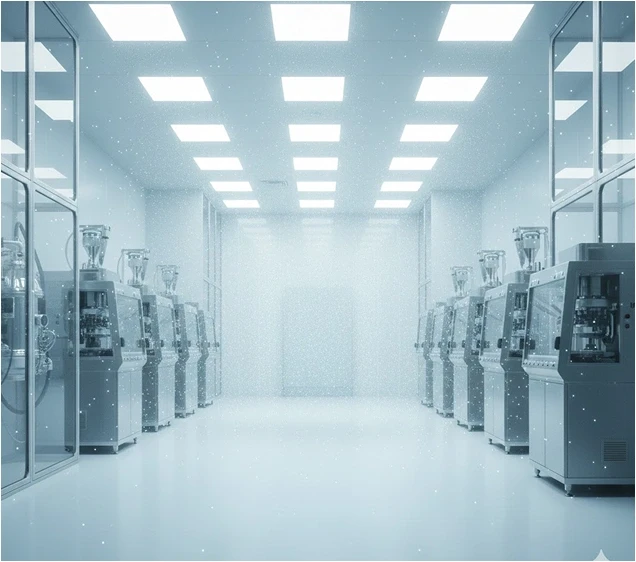
In pharmaceutical and food facilities, dust particles are often extremely fine, lightweight, and easily aerosolized. They do not settle quickly. Instead, they remain suspended in the air, migrating across rooms, entering HVAC systems, and settling on surfaces far removed from their point of origin.
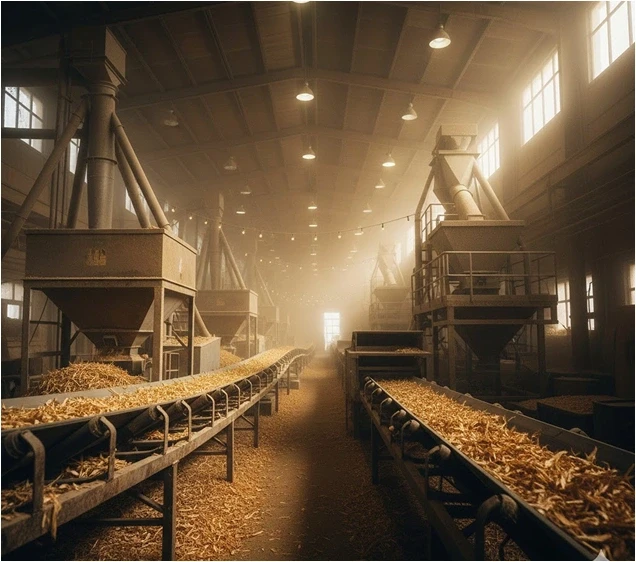
Processes such as blending, granulation, tablet compression, capsule filling, coating, and packaging generate dust continuously. In food plants, milling, mixing, and ingredient transfer release organic powders that are both combustible and contamination-prone. Chemical processing introduces an additional layer of complexity, as many powders are volatile, reactive, or toxic.
Once airborne, this dust becomes difficult to control without direct intervention at the source.
Why Cross-Contamination Is the Silent Threat
In regulated environments, cross-contamination is often more damaging than immediate exposure. A single airborne particle can compromise an entire batch, trigger recalls, or invalidate cleanroom conditions.
General ventilation and room-level air purification may reduce visible dust, but they do not prevent microscopic transfer between processes, rooms, or production stages. In facilities producing multiple products, this risk multiplies rapidly.
This is why regulatory bodies emphasize containment over filtration alone. It is not enough to clean the air — dust must be prevented from spreading in the first place.
The Limitations of PPE and Procedural Controls
Personal protective equipment remains a critical component of safety protocols, but it was never designed to be the primary line of defense against airborne particulate exposure.
Masks and suits rely on perfect usage, consistent training, and constant compliance. They do nothing to protect product integrity, equipment surfaces, or the broader environment. Procedural controls such as cleaning schedules and restricted access help, but they are inherently reactive.
In contrast, engineering controls operate continuously and independently of human behavior. When dust is captured directly at its point of generation, exposure and contamination risks are reduced by design rather than by instruction.
Why Sealed Containment Matters More Than Filtration Alone
Many traditional dust collection systems focus on filtration efficiency — how well particles are captured from the air stream. In controlled industries, however, what happens after capture is just as important.
Filter changes, waste handling, and disposal processes often reintroduce dust into the environment, exposing maintenance personnel and compromising clean areas. This secondary exposure is one of the most overlooked risk points in regulated facilities.
Sealed containment systems address this gap by isolating dust throughout its entire lifecycle. Captured material is enclosed, removed, and disposed of without ever re-entering the workspace. This approach aligns with the strict hygiene and safety requirements of pharma, food, and chemical operations.
Regulatory Expectations Are Rising, Not Stabilizing
Global regulatory frameworks continue to evolve, placing greater emphasis on demonstrable containment, validated processes, and repeatable safety outcomes. Audits increasingly examine not just equipment specifications, but how systems perform during maintenance, cleaning, and abnormal conditions.
Facilities that rely on outdated or partially effective dust control measures face growing compliance risk. Retrofitting solutions after an audit finding is costly, disruptive, and often avoidable.
Forward-thinking operators recognize that modern dust control is an investment in regulatory resilience.
Operational Efficiency Improves When Containment Is Engineered In
Beyond compliance, effective dust control has a direct impact on operational efficiency. Cleaner environments reduce unplanned shutdowns, lower cleaning frequency, and extend equipment lifespan. Product losses from contamination decline, and quality assurance processes become more predictable.
Workers operate more confidently and comfortably in environments where airborne hazards are minimized. This improves productivity while reducing long-term health risks.
In industries where precision and consistency are paramount, these gains are not incremental — they are foundational.
A New Standard for Controlled Industries
Pharmaceutical, food, and chemical manufacturing demand a higher standard of dust control than most industrial sectors. The consequences of failure are too severe, and the tolerance for exposure too low.
As these industries continue to modernize, dust control is being redefined from a support function into a core component of process design. Source-level capture, sealed containment, and modular deployment are becoming the benchmark against which all systems are measured.
Facilities that adopt this mindset are not only protecting their people and products — they are building operations capable of meeting the demands of tomorrow’s regulatory and market environments.