And how source-level dust control is becoming the defining factor for worker safety, compliance, and operational resilience
Mining, cement production, and power generation sit at the foundation of global infrastructure. Every road, building, power grid, and industrial supply chain depends on these sectors to operate continuously and at scale.
Yet despite decades of technological advancement, these industries continue to battle one persistent and dangerous byproduct: airborne dust.
From silica-laden mineral particles to coal ash and cement fines, particulate emissions remain one of the most difficult challenges to fully control. While equipment has become more efficient and automation more advanced, dust exposure continues to affect worker health, regulatory compliance, and long-term site sustainability.
The issue is not a lack of effort — it is a mismatch between traditional dust control methods and the realities of modern industrial operations.
The Nature of Dust in Heavy Industries Is Unforgiving
Mining, cement, and power generation environments produce some of the densest and most aggressive particulate loads found in industry. Unlike light manufacturing dust, these particles are abrasive, persistent, and often generated continuously across large operational zones.
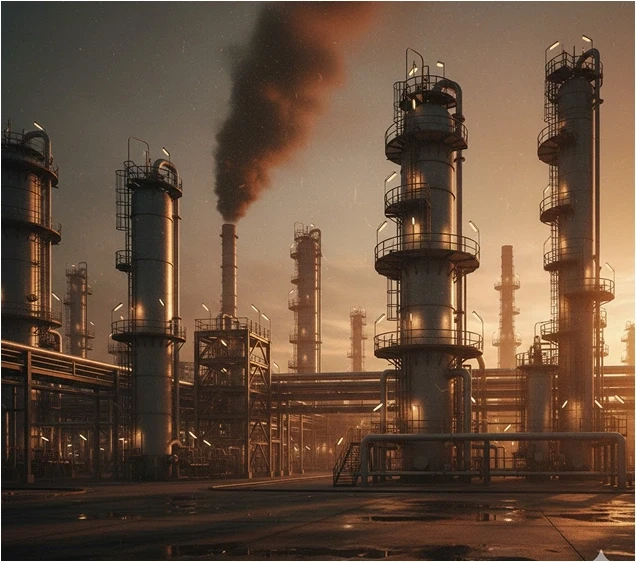
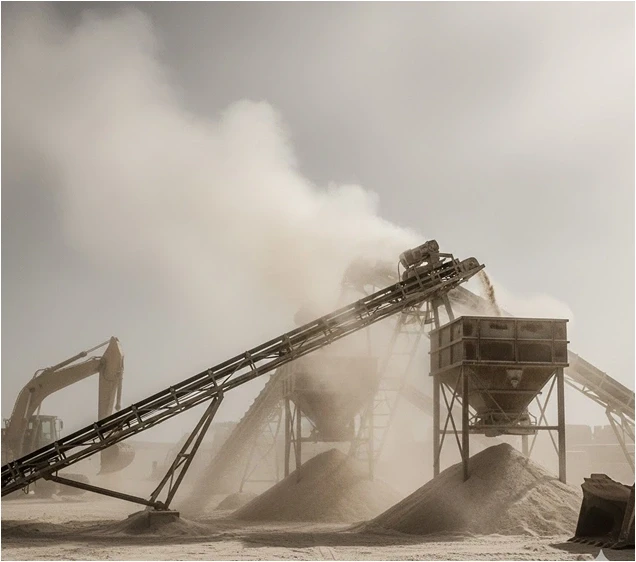
In mining operations, excavation, crushing, hauling, and material transfer release vast clouds of silica and mineral dust. Cement plants generate fine PM2.5 and PM10 emissions during clinker handling, grinding, and bagging. Power generation facilities contend with coal ash, fly ash, and residue during combustion, handling, and maintenance activities.
These particles do not behave predictably. They travel across open spaces, settle into equipment, and re-enter the air with every movement of personnel or machinery. Once airborne, even short-term exposure can pose serious respiratory risks.
The challenge is not just capturing dust — it is doing so before it escapes the process.
Why Centralized and Ducted Systems Fall Short
Traditional dust control strategies in heavy industries often rely on large centralized systems with extensive ducting. While effective in controlled environments, these systems struggle in facilities with complex layouts, outdoor operations, or constantly shifting process points.
Long duct runs reduce capture efficiency and increase maintenance demands. Retrofitting ducting into existing plants frequently requires civil work, downtime, and significant capital investment. In outdoor or mobile operations, ducted systems are often impractical altogether.
As a result, many facilities compromise — installing partial solutions that reduce visible dust but leave fine particulates uncontrolled at the source.
This gap between intention and execution is where exposure risk persists.
Worker Safety Is the First Casualty of Ineffective Dust Control
In heavy industries, dust exposure is not a theoretical concern — it is a daily reality. Prolonged inhalation of silica, coal ash, or cement dust is linked to silicosis, chronic obstructive pulmonary disease, and long-term cardiovascular conditions.
Personal protective equipment provides a layer of defense, but it cannot eliminate exposure entirely. Masks are dependent on proper fit, consistent use, and worker compliance — all of which vary in real-world conditions.
Engineering controls, on the other hand, remove reliance on human behavior. By capturing particulate matter at the point of generation, exposure is reduced automatically, continuously, and reliably.
This shift from reactive protection to proactive prevention is increasingly seen as non-negotiable in high-risk environments.
Compliance Pressure Is Increasing Across Heavy Industries
Regulatory scrutiny around airborne particulate exposure continues to intensify. Agencies worldwide are tightening permissible exposure limits and placing greater emphasis on demonstrable engineering controls rather than administrative safeguards alone.
Facilities that cannot show effective source-level dust containment face growing risks — from fines and operational restrictions to forced shutdowns and reputational damage.
In sectors where margins are already under pressure, unplanned compliance failures can have outsized financial consequences.
Forward-looking operators recognize that investing in modern dust control is not merely about meeting today’s standards — it is about future-proofing operations against tomorrow’s regulations.
The Case for Freestanding, Source-Capture Solutions
As operations grow more dynamic, many facilities are shifting away from rigid, centralized systems toward freestanding, duct-free dust extraction.
These systems can be deployed directly at emission points without civil work or ducting dependencies. They adapt easily to changing layouts, mobile processes, and outdoor environments — making them particularly effective in mining pits, cement handling zones, and power plant maintenance areas.
By sealing captured dust in contained disposal systems, they also eliminate secondary exposure during waste handling and filter replacement. Maintenance becomes safer, faster, and less disruptive to ongoing operations.
For industries where downtime is costly and flexibility essential, this approach aligns dust control with operational reality.
Operational Efficiency Improves When Air Is Controlled
Dust does more than threaten health and compliance — it quietly erodes productivity. Accumulated particulate matter accelerates equipment wear, interferes with sensors, and increases cleaning and maintenance cycles.
Cleaner air translates into cleaner machines, longer service intervals, and more predictable uptime. Workers operate more comfortably and efficiently in environments where visibility and air quality are controlled.
Over time, facilities that prioritize dust capture often see measurable reductions in maintenance costs and operational interruptions — benefits that compound year after year.
A Turning Point for Heavy Industry
Mining, cement, and power generation will always involve challenging environments. Dust cannot be eliminated entirely — but it can be controlled intelligently.
The industry is reaching a turning point where source-level dust control is no longer viewed as an optional enhancement, but as a core component of safe, compliant, and sustainable operations.
Facilities that embrace this shift are not only protecting their workforce — they are positioning themselves as leaders in a future where industrial performance is measured by more than output alone.